
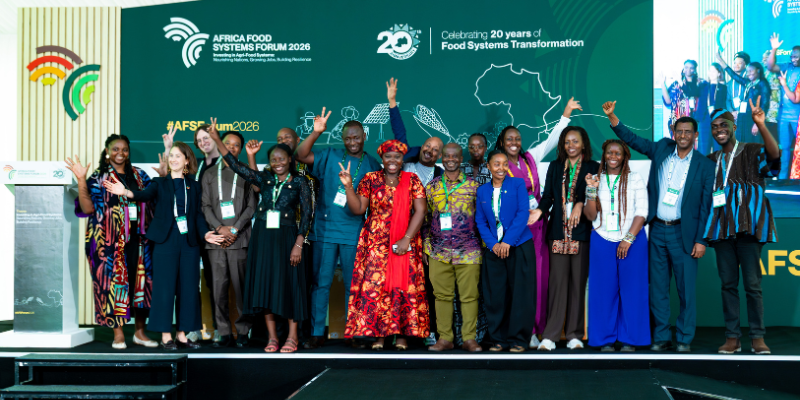
The Ban Ki-moon Foundation (BKMF) joined more than 5,000 participants from over 50 countries at this year’s Africa Food Systems Forum (AFSF) in Kigali, Rwanda, to advance action on transforming Africa’s agri-food systems. Held at the Kigali Convention Centre and organised by the AFS Partners Group, the Forum focused on how investment in agriculture can help nourish communities, build resilience and create jobs across the continent.
BKMF Interim COO Kathrin Ebner, Project Associate Timothy Sung, and Youth AgriChampions contributed to discussions throughout the week at the AFSF’s Youth Dome, with a particular focus on the role of young people in building sustainable and climate-resilient agri-food systems. From high-level discussions to practical examples of youth-led innovation, the BKMF used the Forum to highlight the importance of giving young people a meaningful role in shaping the future of food and agriculture.
Youth leadership and climate-resilient food systems
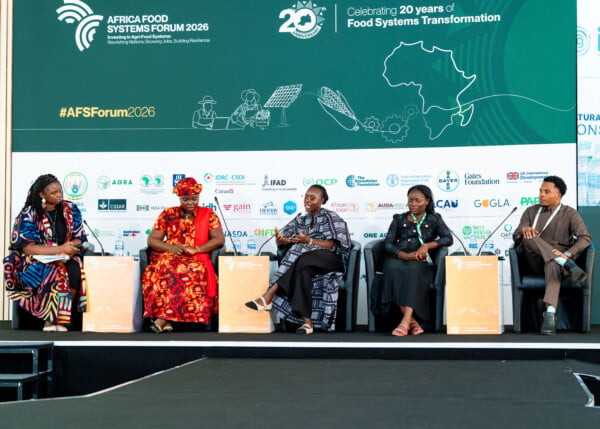
At the high-level event Igniting Youth Food Systems Leadership, Youth AgriChampion Stephanie Meltus highlighted the importance of connecting youth people and their skills to the pathways for them to lead, innovate and scale solutions in climate-smart agriculture and agroecology. In the discussion she was joined by distinguished speakers including former Nigerian President Goodluck Jonathan, Chairman of the Board of the Kofi Annan Foundation Elhadj As Sy, FAO Chief Economist Maximo Torero, and Rwanda’s Minister of State for Youth and Arts, Sandrine Umutoni. On the sidelines of the event, Youth AgriChampions Stephanie Meltus, Florent Iradukundu, and Daniel Anaba, also met with Rwanda’s Minister of State for Youth and Arts Sandrine Umutoni to discuss about their work through the Youth AgriChampions Program and their vision for a more sustainable and resilient future for agriculture.
Food systems are particularly vulnerable to conflicts, affecting the livelihoods of youth and farmers. This was highlighted by Youth AgriChampion Jacob Lekaitogo from Kenya at the event Agrifood Inclusion for Young People with Disabilities and Conflict-Affected Youth. Lekaitogo called for pastoralist communities and their voices to be meaningfully included in decision-making and program co-creation, including at official fora such as the UNFCCC COP. He stressed that lived experiences can help shape more effective responses to conflict and ensure that marginalised communities are not left behind.
Inclusion of youth voices in decision-making
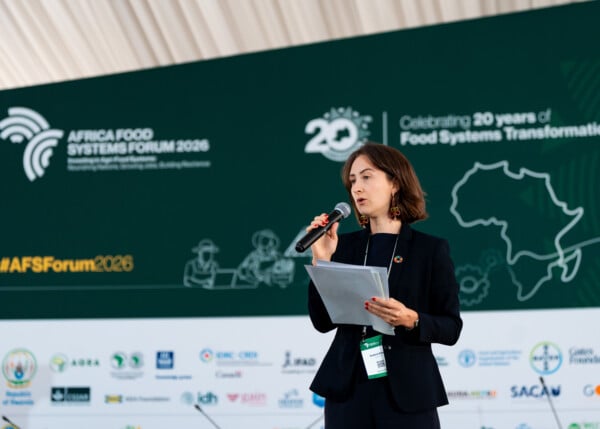
Youth leaders and agrifood experts called for stronger youth participation in transforming agrifood systems and building climate resilience at the event Consolidating African Youth Climate Action in Agrifood Systems. Youth AgriChampions Dora Shimbwambwa, Smart Israel and Daniel Anaba, together with Interim COO Kathrin Ebner, stressed the need to connect smallholder farmers with climate-resilient innovations and ensure that women, young people and people with disabilities have meaningful roles in decision-making. They also called for their voices to be reflected in the climate and agrifood agenda.
To give young people a stronger voice in decision-making, the BKMF supported long-time partner Global Citizen in organising an off-site consultation ahead of COP31. The workshop brought together young people working across agriculture and climate change, including Youth AgriChampions, to develop a youth-led call to action. Participants identified shared priorities for making agriculture more attractive to younger generations, more climate-resilient and sustainable, and discussed how young people can play a greater role in shaping and owning decisions that affect their future.
From ideas to action
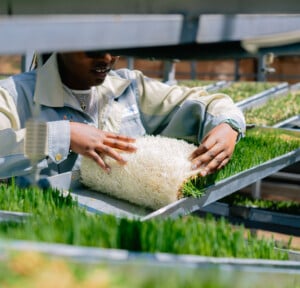
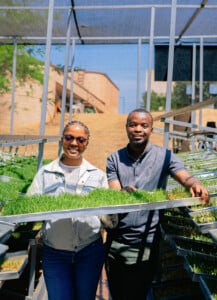
The BKMF also took the conversation from policy to practice with a visit to the Smartel Hydroponic Demonstration Site at the African Leadership University in Kigali, led by its founder and 2025 Youth AgriChampion Israel Smart. Smart and his team demonstrated how hydroponic farming can reduce resource use, bring food production closer to urban markets and strengthen resilience to climate-related resource constraints. The visit offered a practical example of how youth-led innovation can contribute to more resilient food systems.
The week reinforced the importance of bringing diverse voices together to build climate-resilient food systems in Africa and beyond. At the AFSF, the BKMF strengthened collaboration with partners including CGIAR, Welthungerhilfe, the Gates Foundation, Systemiq, AGRA and Global Citizen. These partnerships, together with the perspectives and solutions shared by young people throughout the forum, will inform the BKMF’s work to advance more inclusive and climate-resilient food systems.