Scroll down for the English version
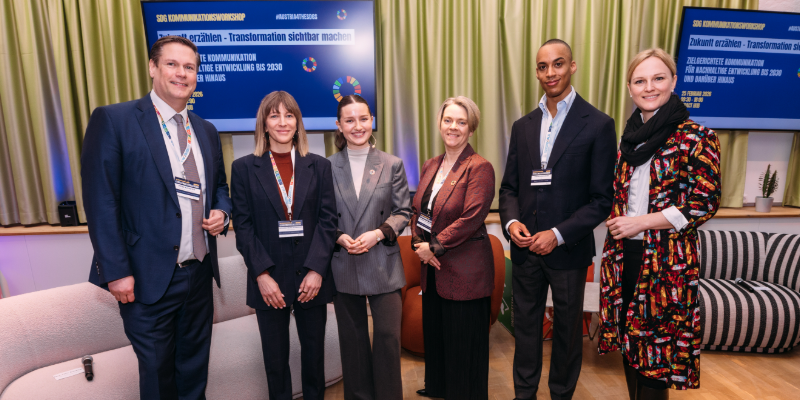
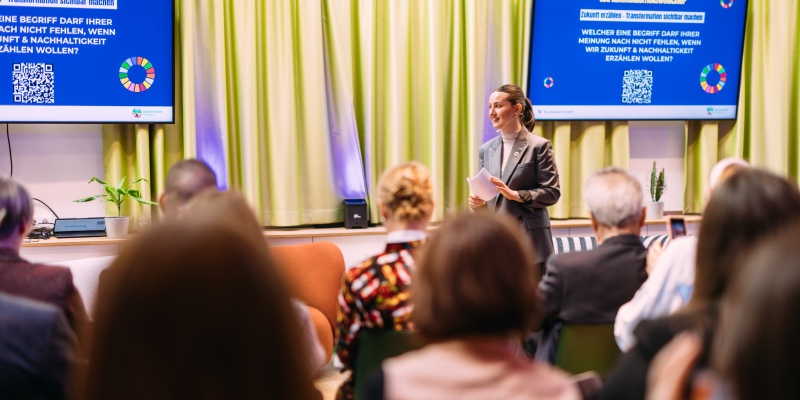
Am 25. Februar 2026 veranstaltete die Ban Ki-moon Foundation (BKMF) in Zusammenarbeit mit dem Bundeskanzleramt den SDG-Kommunikationsworkshop: „Zukunft erzählen – Transformation sichtbar machen: Zielgerichtete Kommunikation für Nachhaltige Entwicklung bis 2030 und darüber hinaus“ im Impact Hub in Wien.
Gemeinsam mit 60 Akteurinnen und Akteuren aus Journalismus, strategischer Kommunikation, Politik und Verwaltung, Wirtschaft, Zivilgesellschaft, Jugend und Wissenschaft, wurde erarbeitet, wie Nachhaltigkeitskommunikation neu gedacht werden kann – glaubwürdig, relevant und wirksam für die 17 Sustainable Development Goals (SDGs).
Dabei sind wir folgenden Fragen nachgegangen:
Wie kann wissenschaftsbasierte Kommunikation zu Nachhaltigkeitsthemen verbessert werden?
Welche Kommunikationsstrategien, Formate und Narrative sprechen insbesondere junge Menschen an?
Wie können Unternehmen Nachhaltigkeitserfolge effektiv nach außen tragen?
Welche Narrative prägen derzeit die öffentliche Kommunikation zur Entwicklungszusammenarbeit?
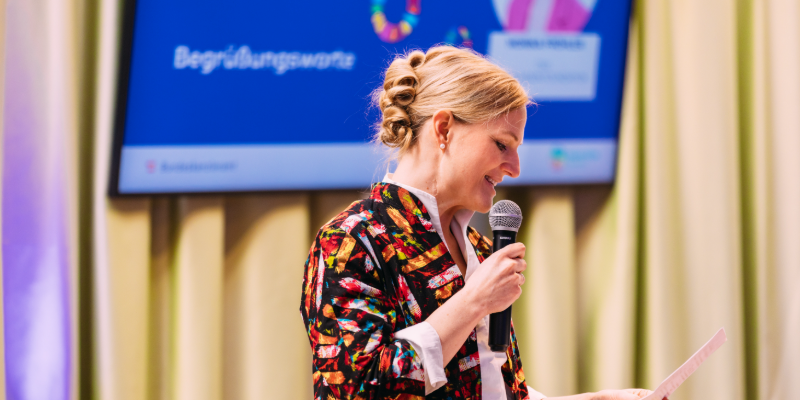
Der Workshop wurde von Monika Fröhler, CEO der BKMF, eröffnet. Sie sprach über die zentrale Rolle transparenter und sektorenübergreifender Kommunikation für die wirksame Implementierung der SDGs. Moderatorin Mira Lobnig, Consultant bei Schütze Public Results GmbH, begleitete die Teilnehmenden durch den Tag.
Perspektiven im Dialog
Aus Sicht von Medien, Wissenschaft, Verwaltung und Zivilgesellschaft wurde im Rahmen einer Fishbowl Diskussion erörtert, wie Menschen über die Nachhaltigkeitsblase hinaus für das Thema nachhaltige Entwicklung begeistert und langfristig erreicht werden können:
- Peter Aufreiter, Direktor Technisches Museum Wien
- Stefan Lenglinger, Journalist und Moderator ORF
- Katharina Häckel-Schinkinger, Kommunikationsexpertin SOS-Kinderdorf
- Sabine Schneeberger, Nachhaltigkeitskoordinatorin Land Steiermark
Peter Aufreiter sprach über die Bedeutung von Museen in der Wissenschaftskommunikation. Komplexe Forschung zu Nachhaltigkeitsthemen im Kontext der SDGs wird durch interaktive Exponate und Ausstellungen begreifbar, anschaulich und erlebbar gemacht.
Stefan Lenglinger zeigte auf, dass negative Nachrichten oft zu Vermeidungsverhalten führen. Journalismus kann Bezug zum eigenen Alltag schaffen und somit Menschen veranschaulichen, wie eine Veränderung in ihrem Verhalten, bspw. eine nachhaltige Lebensweise, zu positiven Auswirkungen führen kann.
Katharina Häckel-Schinkinger, ging auf die Bedeutung von „Niemanden zurücklassen” als Leitprinzip der Agenda 2030 ein und stellte in den Raum, dass Nachhaltigkeitskommunikation inklusiver gestaltet werden muss. Zu oft wird nicht mit Betroffenen, sondern über Betroffene gesprochen.
Sabine Schneeberger sprach über die Freiwilligen Nationalen Berichte zur Umsetzung der nachhaltigen Entwicklungsziele (FNU), an deren Entstehung sie maßgeblich beteiligt war. Dabei stand die Frage im Vordergrund, wie diverse Stakeholder der verschiedenen Sektoren miteinander zusammengearbeitet und kommuniziert haben. Sie betonte, dass eine transparente Abstimmung zwischen Politik, Wirtschaft, Zivilgesellschaft und Wissenschaft entscheidend sei, um gemeinsame Ziele wirksam umzusetzen.
Im interaktiven Teil der Diskussion wurde von einer Teilnehmerin die Schlüsselrolle von Bildung als Grundlage wirksamer SDG-Kommunikation hervorgehoben. Bildung fördere nicht nur das Verständnis für die SDGs, sondern stärke die Fähigkeit, komplexe Zusammenhänge kritisch zu reflektieren und als Multiplikatorin bzw. Multiplikator gesellschaftliche Transformationsprozesse aktiv mitzugestalten.
Interaktive Impulse am Nachmittag
Am Nachmittag wurden in vier Breakout Sessions zentrale Fragestellungen der Nachhaltigkeitskommunikation vertieft und innovative Ansätze für nachhaltige Zukunftsgestaltung ausgearbeitet.
- Florian Leregger, Geschäftsführer Lebensart Magazin und Roswitha Reisinger, Herausgeberin Lebensart, zeigten, wie SDG-Kommunikation in Unternehmen glaubwürdig gelingen kann.
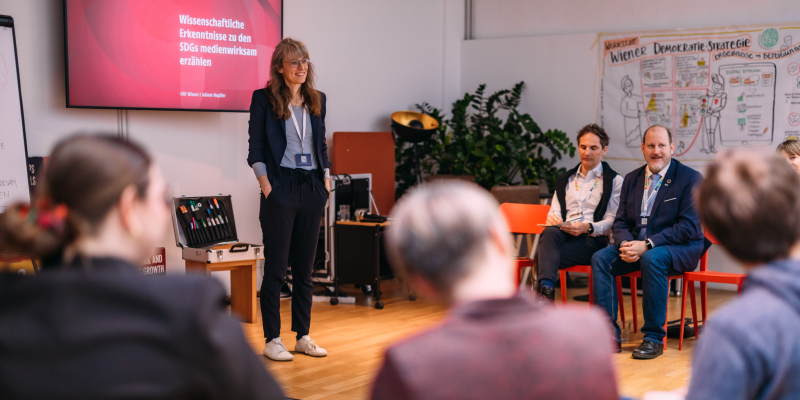
- Juliane Nagiller, Redakteurin ORF Wissen, arbeitete mit den Teilnehmenden daran, wie wissenschaftliche Erkenntnisse verständlich und medienwirksam erzählt werden können.
- Stefan Apfl, Geschäftsführer von Hashtag Jetzt, stellte in den Fokus, wie die SDGs durch Kommunikation für junge Menschen erlebbar gemacht werden können.
- Duygu Özkan, Redakteurin bei Die Presse, diskutierte Strategien für Kommunikation globaler Verantwortung.
In den Ergebnisvorstellungen, welche die Breakout Sessions zusammenfassten, wurde die Relevanz klarer Kernbotschaften betont. Auch wurde festgehalten, dass SDG-Kommunikation in Unternehmen dann gelingen kann, wenn messbare Ziele gesetzt werden und eine Nachhaltigkeitsstrategie im Kerngeschäft des Unternehmens verankert ist. Die SDGs können für junge Menschen erlebbar gemacht werden, indem partizipative Formate geschaffen und positive Zukunftsbilder vermittelt werden, die zeigen, wie sie selbst aktiv zur nachhaltigen Entwicklung beitragen können. In der Entwicklungszusammenarbeit sollten globale Zusammenhänge verständlich gemacht werden. Geschichten über konkrete Wirkungen und persönliche Perspektiven können abstrakte Themen greifbar machen und emotionale Resonanz erzeugen.
Eine Teilnehmerin des Workshops fasste den Tag zusammen: „Als Teil der sogenannten Zillennial-Generation empfand ich es als besonders wertvoll, die Möglichkeit zu haben, mit Expertinnen und Experten darüber zu sprechen, wie sich die SDGs kreativ und zielgruppengerecht an junge Menschen kommunizieren lassen. Der Workshop bot ausreichend Gelegenheit, sich aktiv einzubringen und unterschiedliche Perspektiven kennenzulernen.“
Mit dem SDG-Kommunikationsworkshop „Zukunft erzählen – Transformation sichtbar machen“ haben die Ban Ki-moon Foundation und das Bundeskanzleramt Österreich gemeinsam ein starkes Signal gesetzt: Nachhaltigkeitskommunikation braucht Mut zur Klarheit, Raum für Dialog und den Willen zur echten Zusammenarbeit über Sektorengrenzen hinweg.
Die Ergebnisse des Workshops werden in einem Bericht zusammengefasst, welcher Anfang April erscheinen wird.
Finde die Fotos des Events hier:

————————————————————————————————————————–
On February 25, 2026, the Ban Ki-moon Foundation (BKMF), in cooperation with the Federal Chancellery, hosted the SDG Communication Workshop: “Telling the Future – Making Transformation Visible: Targeted Communication for Sustainable Development until 2030 and Beyond” at the Impact Hub in Vienna.
Together with 60 stakeholders from journalism, strategic communication, politics and administration, business, civil society, youth, and science, participants worked on how sustainability communication can be rethought—to be credible, relevant, and effective for the 17 Sustainable Development Goals (SDGs).
The workshop explored the following questions:
-
How can science-based communication on sustainability issues be improved?
-
Which communication strategies, formats, and narratives specifically appeal to young people?
-
How can companies effectively communicate sustainability successes to the outside world?
-
Which narratives currently shape public communication on development cooperation?
The workshop was opened by Monika Fröhler, CEO of the BKMF. She spoke about the central role of transparent and cross-sectoral communication for the effective implementation of the SDGs. Moderator Mira Lobnig, Consultant at Schütze Public Results GmbH, guided the participants through the day.
Perspectives in Dialogue
From the perspectives of media, science, administration, and civil society, a fishbowl discussion explored how people beyond the “sustainability bubble” can be inspired and reached long-term for the topic of sustainable development:
-
Peter Aufreiter, Director of the Technical Museum Vienna
-
Stefan Lenglinger, Journalist and Presenter at ORF
-
Katharina Häckel-Schinkinger, Communication Expert at SOS Children’s Villages
-
Sabine Schneeberger, Sustainability Coordinator for the Province of Styria
Peter Aufreiter spoke about the importance of museums in science communication. Complex research on sustainability topics in the context of the SDGs is made tangible, clear, and experiential through interactive exhibits and exhibitions.
Stefan Lenglinger pointed out that negative news often leads to avoidance behavior. Journalism can create a connection to everyday life and thus show people how a change in their behavior—such as a sustainable lifestyle—can lead to positive effects.
Katharina Häckel-Schinkinger addressed the importance of “Leaving No One Behind” as a guiding principle of the 2030 Agenda and suggested that sustainability communication must be made more inclusive. Too often, people talk about those affected rather than with them.
Sabine Schneeberger spoke about the Voluntary National Reviews (VNRs) on the implementation of the Sustainable Development Goals, in whose creation she played a key role. The focus was on how diverse stakeholders from different sectors worked and communicated together. She emphasized that transparent coordination between politics, business, civil society, and science is crucial for effectively implementing common goals.
In the interactive part of the discussion, a participant highlighted the key role of education as the foundation of effective SDG communication. Education not only promotes an understanding of the SDGs but also strengthens the ability to critically reflect on complex relationships and to actively help shape social transformation processes as a multiplier.
Interactive Impulses in the Afternoon
In the afternoon, four breakout sessions delved deeper into central questions of sustainability communication and developed innovative approaches for shaping a sustainable future.
-
Florian Leregger, Managing Director of Lebensart magazine, and Roswitha Reisinger, Publisher of Lebensart, showed how SDG communication in companies can succeed credibly.
-
Juliane Nagiller, Editor at ORF Wissen, worked with participants on how scientific findings can be told clearly and with media impact.
-
Stefan Apfl, Managing Director of Hashtag Jetzt, focused on how the SDGs can be made experiential for young people through communication.
-
Duygu Özkan, Editor at Die Presse, discussed strategies for communicating global responsibility.
In the presentation of results summarizing the breakout sessions, the relevance of clear core messages was emphasized. It was also noted that SDG communication in companies can succeed if measurable goals are set and a sustainability strategy is anchored in the company’s core business. The SDGs can be made experiential for young people by creating participatory formats and conveying positive visions of the future that show how they can actively contribute to sustainable development. In development cooperation, global interconnections should be made understandable. Stories about concrete impacts and personal perspectives can make abstract topics tangible and create emotional resonance.
A workshop participant summarized the day: “As part of the so-called Zillennial generation, I found it particularly valuable to have the opportunity to talk to experts about how the SDGs can be communicated to young people in a creative and target-group-oriented way. The workshop offered ample opportunity to get actively involved and get to know different perspectives.”
With the SDG Communication Workshop “Telling the Future – Making Transformation Visible,” the Ban Ki-moon Foundation and the Austrian Federal Chancellery have together sent a strong signal: sustainability communication needs the courage for clarity, space for dialogue, and the will for genuine cooperation across sector boundaries.
The results of the workshop will be summarized in an Outcome Paper to be published in early April.
Check out the pictures of the event here: